
Shared journeys: How Sarah Pip and Fern navigate arthritis and mobility problems together
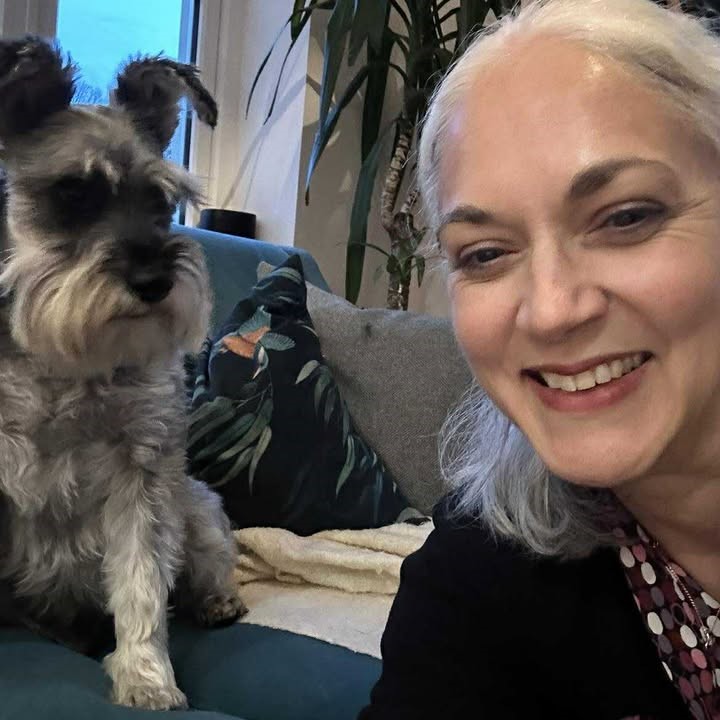
Arthritis, mobility challenges, and joint conditions aren’t just human experiences – our animals often face them too. As One Medicine demonstrates, humans and animals share many of the same diseases, and often the same diagnostic approaches and treatments can help both. Sarah, her sister’s Miniature Schnauzer, Pip, and her own dog, Fern, are a perfect example of this shared journey. As Sarah learned more about her own osteoarthritis, she also found herself supporting the animals in her life through remarkably similar challenges.
Sarah’s diagnosis: Understanding her own osteoarthritis
“Two years ago, I went to the doctor to find out about stiffness in my hip”, Sarah said. “It was becoming more apparent at work, especially during long hours supporting pupils with examinations. Although I loved the work, I noticed that sitting in the same position for hours, and repeating this again in the evenings while writing Dyslexia reports, meant I wasn’t getting enough movement.
The doctor referred me to physiotherapy, where they checked my hip and leg joints. They said I had arthritis and gave me some basic but effective exercises. At the time, they thought it was simple wear and tear. I was then referred for a scan, and the physiotherapist at
the GP practice explained the results. She showed me the affected areas on a skeleton and compared this to my X-ray. It was fascinating. She told me I have osteoarthritis of the hip and degeneration in my spine, between vertebrae 9 and 10 and 4 and 5. She also said the main cause of the hip arthritis was hip impingement – something I’ve apparently had since childhood.”
Pain flares, lifestyle changes, and managing a long-term condition
“A year ago I went back to the doctor because I had a flare-up of pain. It was particularly bad in winter. I was prescribed Naproxen and referred for a Dexa scan. When I returned to the physiotherapist, she described my arthritis as ‘moderate,’ although the pain suggested otherwise. She gave me more specific exercises and told me to stop the earlier ones. Maintaining a good weight and daily exercise became essential, and I was advised to completely change my lifestyle – repeated gardening was no longer an option.
I was also referred to outpatient physiotherapy for a few weeks. After four weeks they told me the exercises had improved things by 20%, so I was discharged. Short bike rides, my exercises, and walking the dogs make a huge difference. I didn’t take Naproxen at all during the summer and now only take it occasionally since returning to work.”
Noticing symptoms in our companion animals: Pip’s early arthritis
“Pip is my sister’s 9-year-old Miniature Schnauzer, and I’ve spent a lot of time with him since the summer due to her family commitments, walking him with my dog Fern. My sister noticed Pip picking his leg up on longer walks as if it was uncomfortable, and mentioned it to the vet, who examined his back leg and confirmed early-stage arthritis. They haven’t suggested scans or painkillers yet but my sister is keeping a close eye on him and managing his diet.”
Fern’s mobility struggles: When specialist care is needed
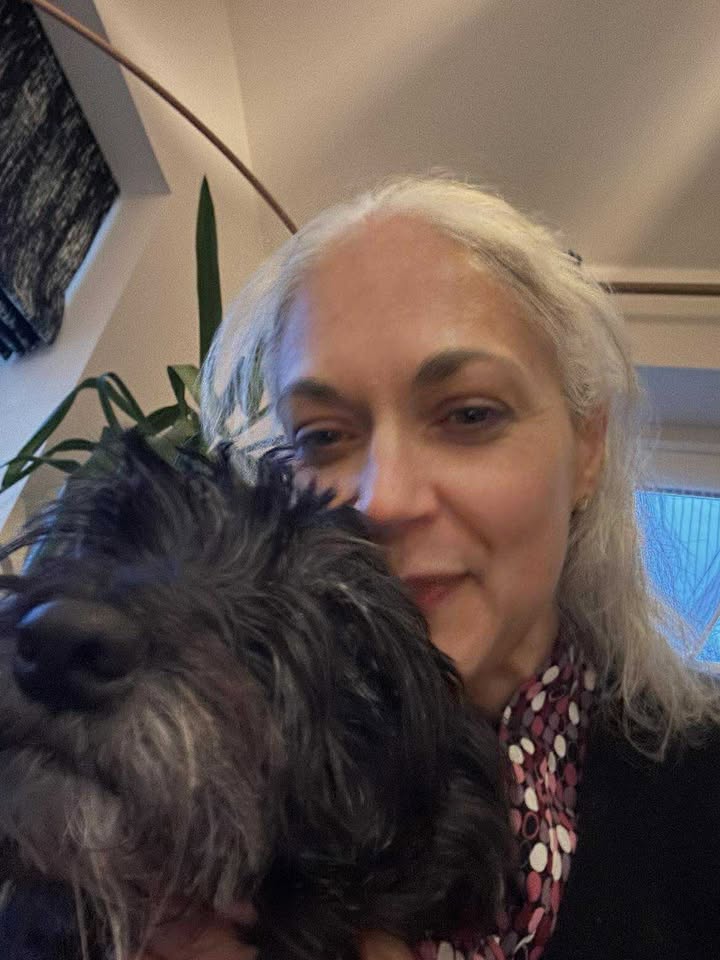
“One of my dogs, Fern, has also struggled with mobility problems. I bought Fern during lockdown to keep my other dog, Remus, company. The boys and I fell in love with her instantly. She’s the best I’ve ever owned – bossy, loving, and friendly with everyone. She used to hide before walks, and when she eventually came out from under the dining room table, she would skip after a while.
I took Fern to the vet and she was referred to an orthopaedic specialist, who asked about her behaviour, constantly jumping on and off furniture. After scans, they discovered she had luxating patella, a slipping kneecap. She needed Tibial Tuberosity Treatment, including a 12-degree wedge taken out of her femur and plates which were ordered from America. Fern was operated on during the summer holidays and the operation was a success. She still needs and enjoys short walks, and the specialist said she may always skip – it has become a learned behaviour.”
The One Medicine connection: Shared conditions, shared care
Sarah, Pip and Fern’s journey shows just how closely our lives, and our health, are connected with those of the animals we love. Whether it’s mobility issues, chronic pain, or recovery from surgery, humans and animals often face remarkably similar challenges. But through empathy and shared care, we can help each other.
Through One Medicine, we believe that by understanding these shared conditions and bringing together human and veterinary medicine, we can improve life, and movement, for everyone.